PROGRAMME
 Apply Here: https://forms.gle/PDr4QiTU6vfHWSVi9
Training School COST CA22134 FoodWaStop
Valorisation of food processing side-streams in a circular bioeconomy
26-28 May 2026
Cēsis, LATVIA
Local organizer Jessica Girardi (WG4 leader)
Chair Gianfranco Romanazzi, Vice Chair Fernando Pérez Rodriguez
With the kind contribution of

Introduction
Food loss and waste (FLW) is a global challenge recognised by international governments and organizations. Reducing FLW is key to sustainably ensuring nutritional food security for an increasing world population. It is a target of the Sustainable Development Goals of the United Nations, and the Farm to Fork Strategy of the European Green Deal. The FoodWaStop COST Action addresses these challenges and aims to: (i) build an interdisciplinary and multi-actor European Network that will also connect with non-EU Mediterranean countries, to promote knowledge on FLW beyond the state of the art; (ii) determine the incidence of FLW at critical points of the fruit and vegetable value chain; (iii) foster technological innovations and sustainable management strategies to reduce and prevent FLW; and (iv) valorise agrifood waste to promote a circular bio-economy.
Working Group 4 (WG4) of COST Action CA22134 FoodWaStop focuses on highlighting the scientific breakthroughs and techno-economicsrelated to the valorisation of FW, with the goal of creating new concepts and methodologies for FW recycling and valorisation technologies. The deliverable-oriented knowledge creation on valorisation of FW will contribute to reduction of environmental pollution, promotion of sustainability and implementation of a circular bioeconomy. The contributions provided by the WG4 members are intended to explore available and adopted strategies for the potential industrial valorisation of fruit, vegetable and cereal side-streams for extraction of bioactive compounds (e.g., natural coloring, antioxidants, preservatives, antimicrobial agents, alternative packaging materials across different industries).
To achieve its goals, WG4 organizes this Training School in Latvia (Cēsis), where experts in the field of food processing side-stream valorisation in a circular bioeconomy will provide masterclasses to train young participants and prepare the next generation of specialists.
Aims
The aim of this Training School is to transfer knowledge on a practical strategy for valorising agri-food processing side-streams by treating valorisation as a systemic chain that starts from biomass generation → collection and stabilisation → extraction/transformation → to product development.
The career development of Young Researchers and Innovators will be supported by acquiring professional skills and knowledge enabling them to build a waste-to-resource mindset that is required to map where and in what form side-streams arise; treat by-products as food-grade products from the point of origin with hygiene and traceability; promptly stabilise the waste; and make resulting products visible and attractive to potential downstream users through establishing quality attributes and specification (quantity, composition, seasonality, hygiene status).
Contents
The training school covers fundamental knowledge and shares good practices. The main topics covered are: (i) agri-food waste definitions and overview of current valorisation strategies, (ii) waste-to-resource approach, (iii) holistic biorefinery approach, (iv) workflow for resource valorisation, (v) challenges in effective valorisation.
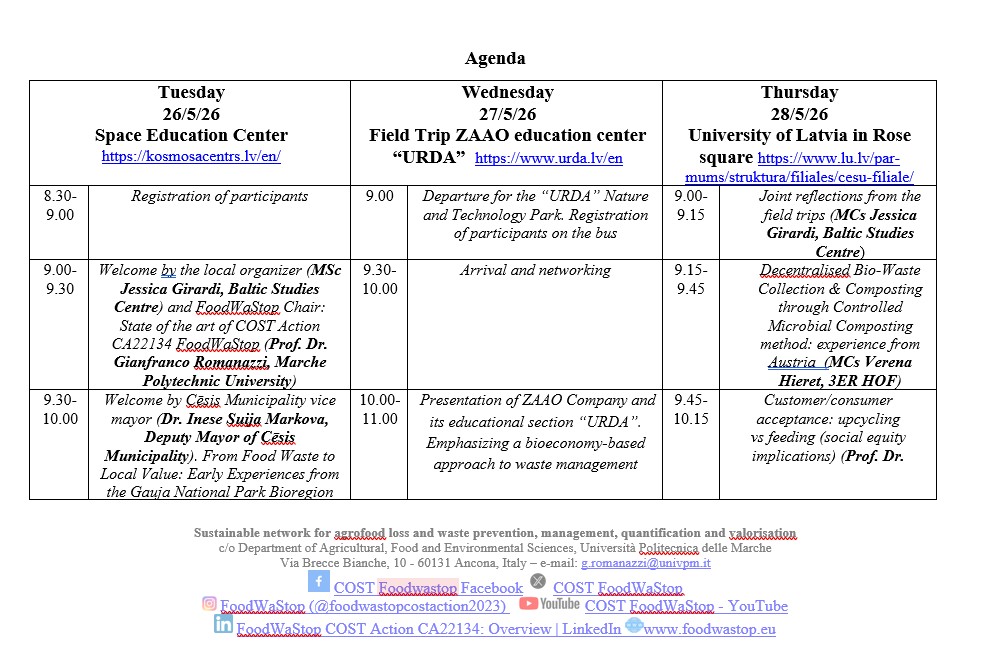
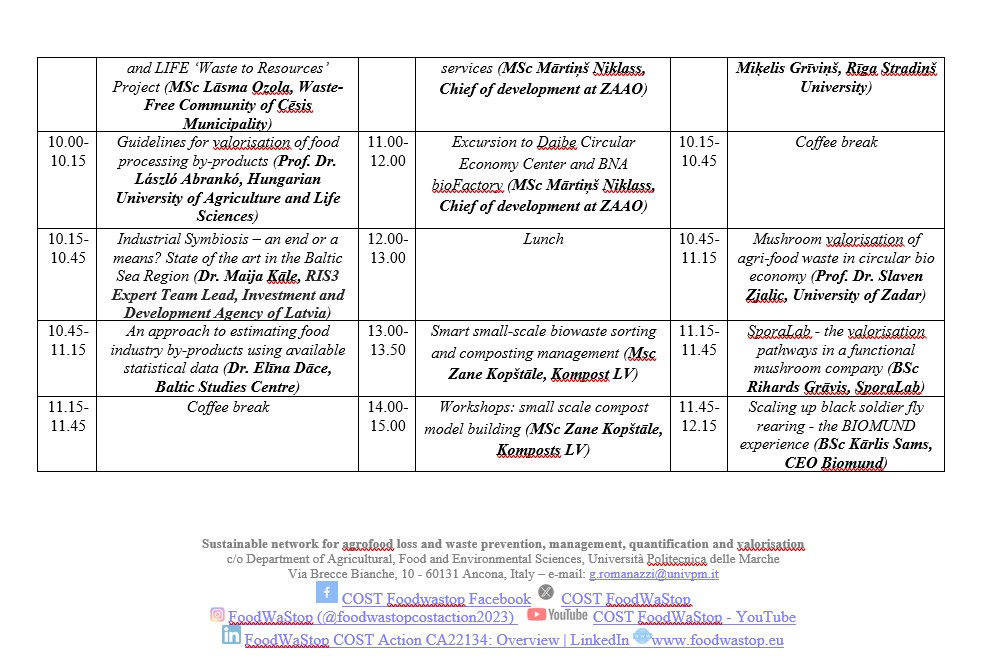
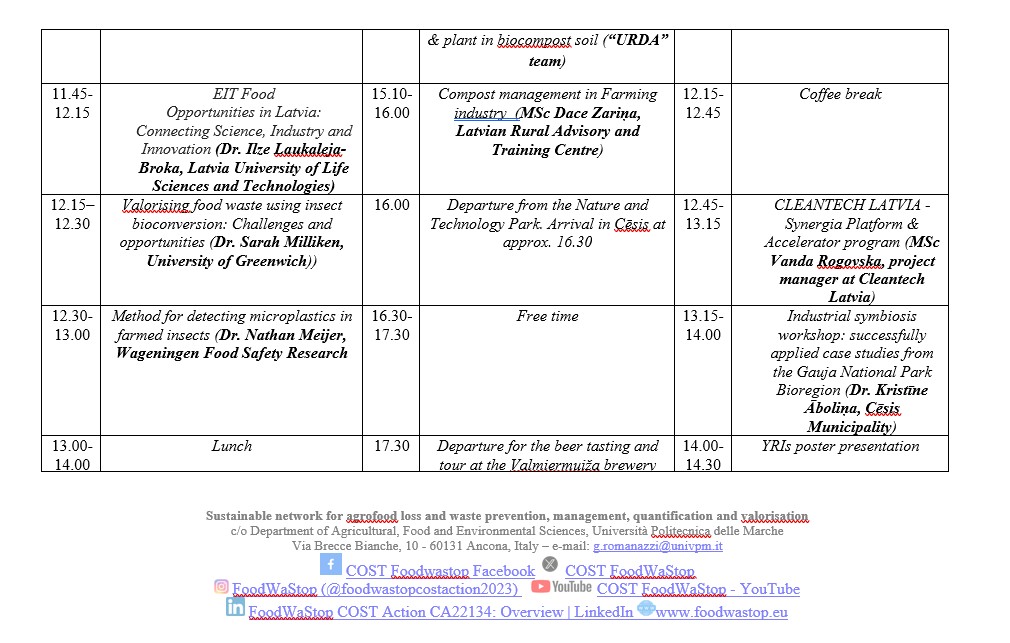
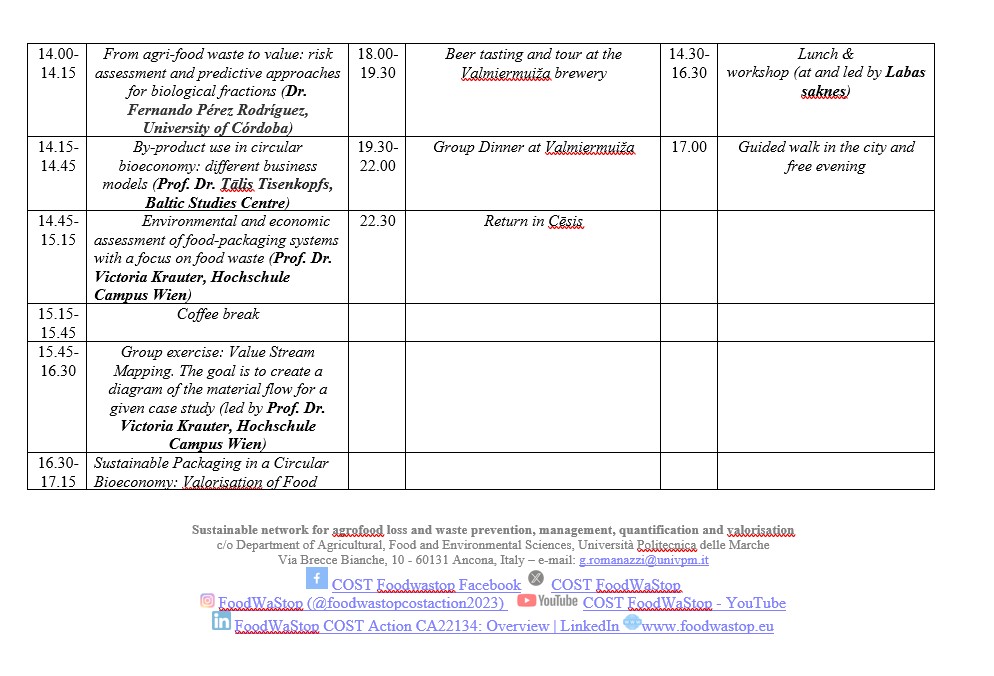
The courses will be delivered by international experts in the field and include theoretical classes, practical applications and a field visit to a Nature and Technology Park designed for waste sorting, recycling and valorisation (e.g. reverse osmosis treatment process and the process of obtaining biogas and electricity from waste). In this way the participants will gain theoretical information in the field associated with real life scenarios.
Language
The Training School will be delivered in English. The level of proficiency of the candidates in this language will be requested during the application process
Certificate of completion
FoodWaStop in collaboration with the local organiser will issue a certificate that will confirm participation in the Training School
Organizational matters
The duration of the Training School will be 3 days from May 26th to 28th. Thus, trainees are invited to arrive in Cēsis on Monday, May 25th and to leave on Friday, May 29th
Travel info
All participants are expected to make their own travel and accommodation arrangements for the Training School.
Closest airport: Airport RIX (Riga airport): 100 km from Cēsis (approx. 1h 40m car drive). From the Airport a bus line 22 is running every 10 minutes to Riga center/train station (https://www.1188.lv/en/transport/cities/riga/70-4673). From the train station (https://maps.app.goo.gl/cXgXU5xKfdrngUkD8) or bus station (https://maps.app.goo.gl/5QAeWVuZYvpbiLrt5) it is possible to reach Cēsis by public transport, either by train (approx. 1h 40m trip) or by bus (approx. 2h trip).
Travelling to Cēsis by train: Train schedules – https://www.vivi.lv/en/.
Travelling to Cēsis by bus: Bus schedules – https://www.1188.lv/en/transport/buses/rigas-sao/cesu-ao/105317/105255.
Both the train station and the bus station are located in Cēsis city center.
It is strongly advised to download the Mobilly app to be able to purchase tickets easier and faster (https://mobilly.lv/en/)
For more details, check the official page of tourist info: https://visit.cesis.lv/en/transport/how-to-get-here/#by-public-transport
Reimbursement for COST invited participants
For participants invited from the COST Action CA22134 FoodWaStop budget, the cost of participation will be reimbursed according to COST rules after daily signature of the attendance list at the Training School and submitting the reimbursement claim form on e-COST once back at home. Participants need to book their own accommodation and cover food costs (except for snacks at the coffee breaks), with a fee of 20 Euro per day for lunches, while the group dinner is optional
Self-funded participants
The Training School accepts applications from candidates that have their own source of funding. Those participants will need to cover the cost of all the meals themselves
The venues
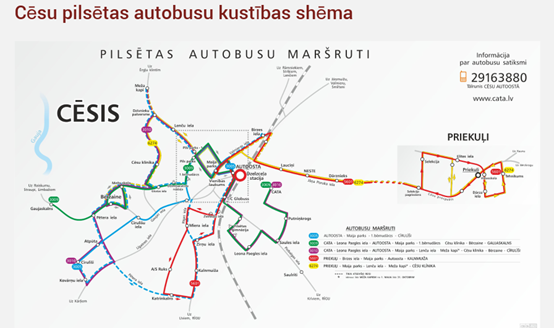
The activities of the Training School will take place in two different venues located in Cēsis city center. The program of the 1st day (Tuesday, May 26th) will take place at the Space Education Center (https://kosmosacentrs.lv/en/). The building is located downtown, on Cīrulīšu Street, 63. It is reachable by foot from the old town in around 30 minutes. It is connected with the old town by the CATA bus line 3005 (see timetable here) or 3010 (see timetable here), direction Ciruliši. See map below (https://www.cata.lv/index.php/regularie-parvadajumi/autobusu-kustiba/cesis)
The program of the 3rd day (Thursday, May 28th) will take place at the University of Latvia branch office in Rose Square (https://www.lu.lv/par-mums/struktura/filiales/cesu-filiale/). The building is located in the old town at walkable distance from the main accommodation area.
For the 2nd day (Thursday, May 27th) a field trip is organised. The visit will take place at the ZAAO education center URDA (https://www.urda.lv/en) located in an area around a 30 minute drive from Cēsis center.
Optional activities
In addition to the regular agenda of the Training School, three extra activities are proposed, and each participant is asked to register in advance for these (one or more).
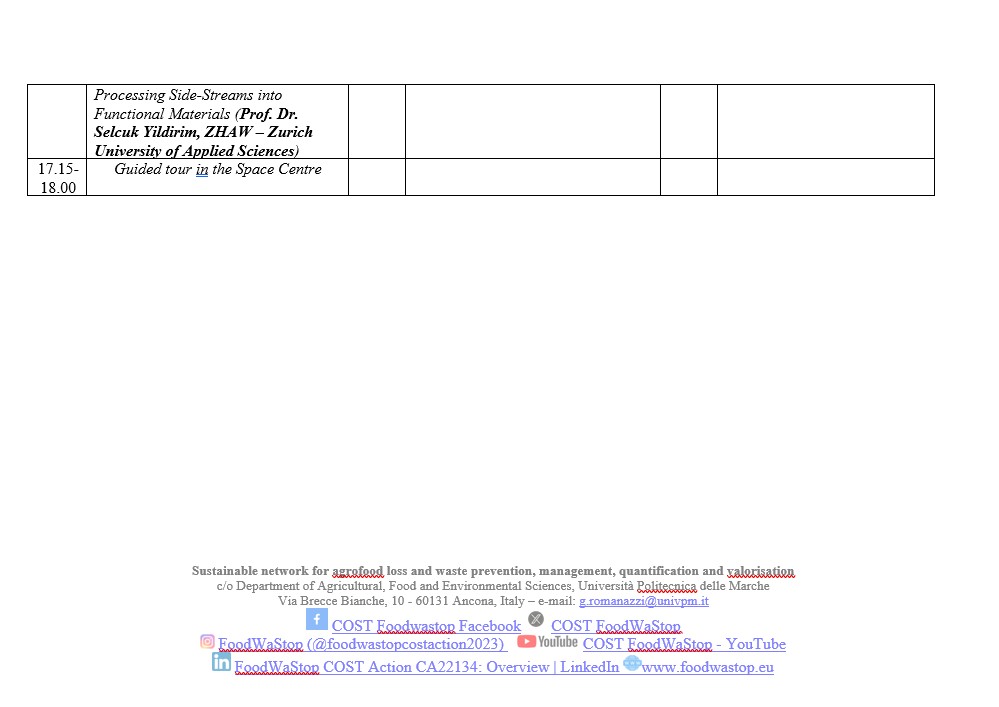
- Guided tour at the Space Education Center → to take place at the end of the first day, tailored to the thematic focus, highlighting resource efficiency, circularity and waste management challenges in space exploration. 7 EUR/ per person. Duration approx. 1 hour.
- Beer tasting at Valmiermuiža brewery → special brews (tour in the brewery + five beers/alcohol or alcohol-free). 17 EUR/ per person. The visit starts with a guided tour in the brewery after the tasting of five different craft beers. During the tour the guide will share the story about malt spent grain valorisation strategies adopted by the company within a circular bioeconomy approach. Duration 1,5 – 2 hours.
- “Labas saknes” fermentation workshop → TBD
Accommodation
Hotel selection/reservation needs to be managed by the participants. We strongly recommend that you make your reservation as soon as possible. Please be aware that accommodation can sell out very fast. There are not many options for booking a hotel or a guesthouse in the town. See the platform booking.com for the suggested ones or other kinds of privately managed accommodation.
Suggested accommodation:
Hotel Cēsis
Address: Vienības square 1
Website: Hotel Cēsis
Hotel Vanadziņa māja
Address: Rīgas street 15
Website: Hotel “Vanadziņa māja”
Hotel Katrīna
Address: Lielā Katrīnas street 21
Website: Hotel Katrīna
Hotel Villa Santa
Address: Gaujas street 88
Website: Villa Santa Hotel
Hotel Province
Address: Niniera street 6
Website: Hotel Province
Rucka Manor
Address: Piebalgas street 19
Website: Rucka Manor Apartments
Spīdala house
Address: Lielā Katrīnas street 12a
Website: Spīdalas nams
The Vicarage
Address: Torņa street 3
Website: Mācītāja māja
Apartments: suggested options
Prepare yourself for your trip to Cēsis
Feel free to take a look at the digital version of the city tourism guide (pages 2-6): CN_turisma_celvedis_EN-2025.pdf
Contact person
Jessica Girardi | jessica.girardi@bscresearch.lv | tel. +371 29336522